Hotels, Eggs and Hurricanes: How Scarcity Raises Prices

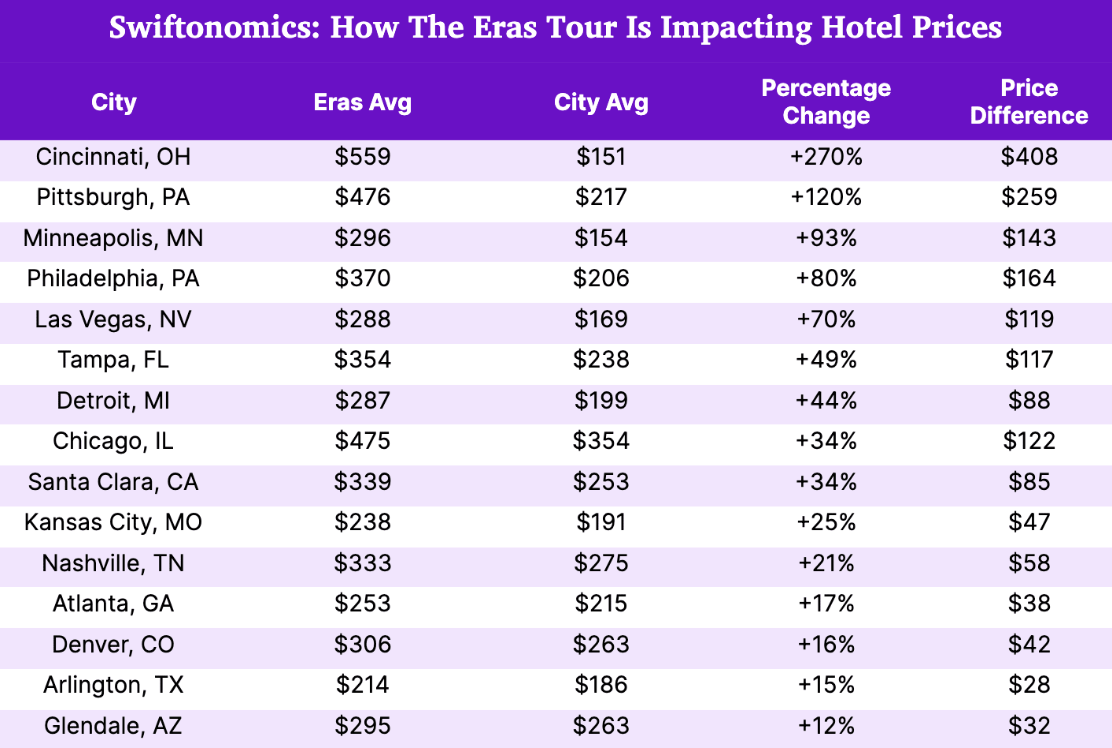
Table 1: Average hotel prices during Taylor Swift’s Eras Tour compared with typical city rates, showing substantial demand-driven increases across selected US cities.
Why can a hotel room on a normal weekday cost £120 per night, but £400 on a concert night? The hotel room hasn’t become larger, cleaner, or more luxurious. The short answer is that demand has changed. During a concert evening, more people want the same limited number of rooms, so hotel rooms have become scarcer relative to demand. Therefore, the price of the room may increase to indicate that more buyers are competing for a limited number of rooms.
What is Scarcity?
Scarcity begins with a simple imbalance: more people want something than can easily be provided. Resources available on Earth are limited; a hotel only has a fixed number of rooms, an aircraft only has a fixed number of seats, and a farmer can only produce a certain number of apples in a season. Therefore, choices need to be made regarding the allocation of limited goods and resources in the market. This is where supply and demand enter the story, helping to determine market prices.
In our hotel room example, supply represents the number of rooms available while demand represents the number of people willing and able to book them at different prices. During the concert, the short-term supply of hotel rooms is fixed, but demand has increased sharply (more people are seeking accommodation after the concert); This explains why scarcity has become more intense.
Now that there is more competition for the same limited supply of rooms, sellers can raise prices because more customers are willing to pay a premium. When prices increase buyers are encouraged to look elsewhere which allows the hotel to allocate rooms to those most willing and able to pay. This resembles a silent auction, in which rising prices gradually filter out lower-paying buyers.
Point of clarification:
Scarcity arises because available resources are limited relative to human wants. A rare item with zero demand may still be rare, but it has little economic value. For example, the supply of a rare, useless rock is limited, yet few people would be willing to pay for it.
Scarcity is not just about rarity; it is about competition for limited resources.
Case Study 1: Concert-night Hotel Rooms
This first example demonstrates demand-side scarcity, because hotel rooms have inelastic supply in the short-run: hotels aren’t able to immediately build extra rooms for an upcoming event.
To put the significance of these sudden price gaps into perspective, I carried out primary data collection on Trip.com which compared hotel room prices the week before the Post Malone’s concert, the concert date (16/09/2026) and the week after. Thirteen of the 16 hotels around Kai Tak increased their prices compared with the week before. My findings are below:
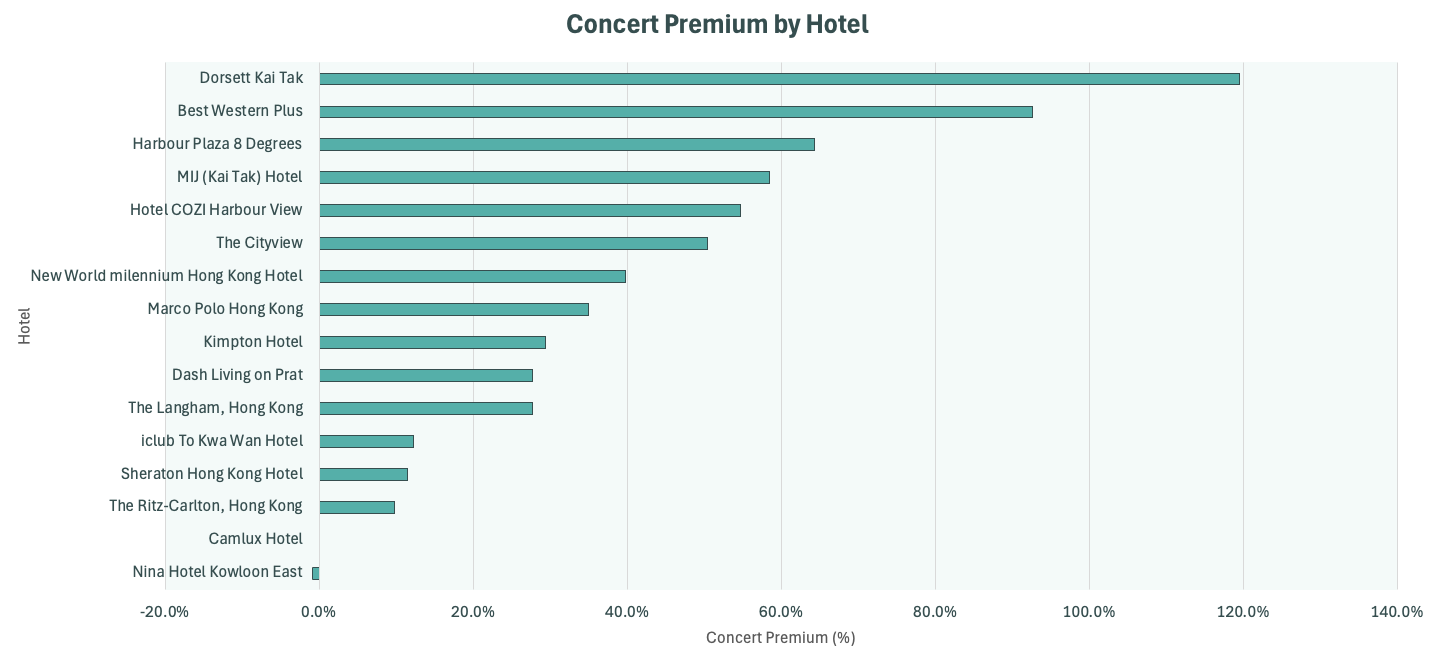
Figure 1: Bar chart comparing concert premiums for each hotel. Trip.com was used to collect prices of 16 Hong Kong hotels. The number of guests, number of rooms, day of the week and duration of stay were kept constant. Comparable room types were selected where possible. Prices include taxes and fees.
The median hotel price rose from £80.50 to £110.50, an increase of roughly 37%, supporting the idea of scarcity during concert evenings. Since the supply of hotel rooms available in the area was largely fixed, the general chain of scarcity can be explained: the concert increased the number of visitors seeking accommodation, and more customers competed for the same rooms. Therefore, many hotels increased their prices, allocating the rooms to the customers who were willing to pay the premium.
Case Study 2: Avian-flu and Egg Prices
Avian flu is a viral disease that affects birds and can spread rapidly through commercial poultry flocks. Severe outbreaks may lead to infected birds dying or entire flocks being culled to prevent the disease from spreading further.
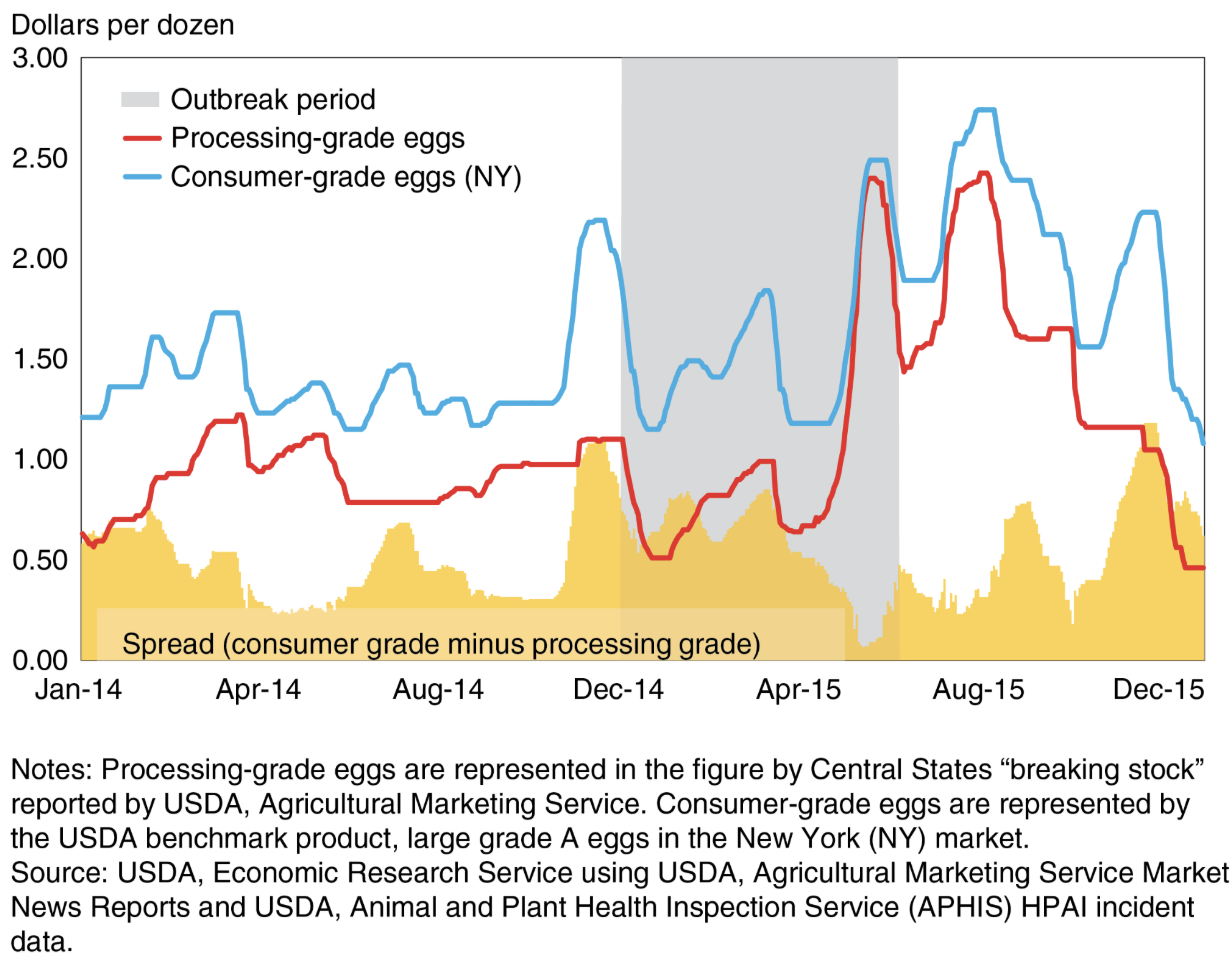
Figure 2: Egg prices before, during and after the 2014–15 avian influenza outbreak, showing how reduced supply drove sharp increases in both processing-grade and consumer-grade egg prices.
The figure above shows the price of shell eggs from January 2014 to December 2015. The shaded area represents the period of the Avian flu outbreak. Looking at the graph we can notice a large rise in the price of eggs before the avian-flu outbreak even began. How is this possible? Are people predicting the future? The earlier price spike in the winter of 2014 was likely driven mainly by seasonal demand, not yet by the Avian flu supply shock because egg demand rises before Thanksgiving and Christmas.
During the Avian flu outbreak, around 39 million egg-laying hens were lost, which caused egg production to fall and prices to rise sharply. Why was there a major price spike only after the Avian-flu outbreak? This is because egg production had not fallen enough to create a severe shortage in the earlier months of the outbreak, so the full effect on supply and prices took time to appear.
Additionally, a biological lag in egg production was created as:
Infected flocks had to be destroyed
Farms had to clean and disinfect facilities
New hens had to be raised
Young hens needed time before they could begin laying eggs
So even though the outbreak ended around June, the reduction in egg production continued for months afterwards, maintaining the sudden increase in egg prices. A special characteristic of the egg market is that eggs have a relatively inelastic demand; consumers do not reduce the quantity they buy as sharply as they might for less essential or more easily replaceable goods. As a result, a relatively small reduction in supply can produce a much larger increase in price.
We can learn from this example that scarcity is not always caused by consumers suddenly wanting more. It can also be caused by production being disrupted.
Case Study 3: Emergency Supplies after a Disaster
Hurricanes Katrina and Rita caused major losses of crude-oil production which reduced gasoline supply. As we have seen, a loss in supply can rapidly increase the price of goods; Hurricane Katrina halted 27% of US crude-oil production and 13% of national refining capacity.
Since the supply of petrol was disrupted by a disaster while demand for petrol remained high, scarcity increased because fewer goods were available. This caused average petrol prices to rise by about 50 cents per gallon.
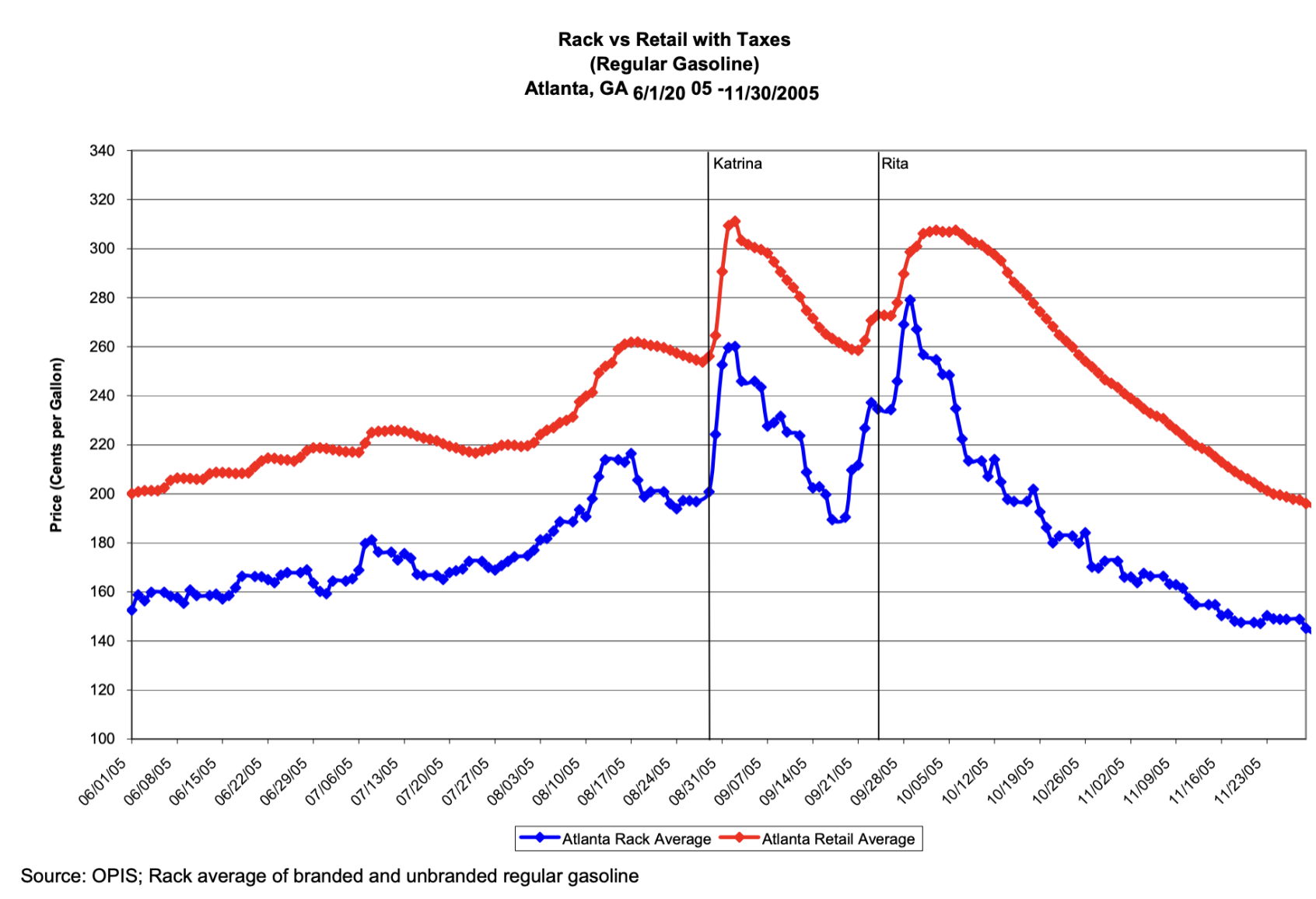
Figure 3: Average wholesale and retail petrol prices in Atlanta during Hurricanes Katrina and Rita, showing how supply disruptions caused sharp short-term price increases in 2005.
The graph clearly illustrates how the price per gallon of petrol rose significantly following both Hurricane Katrina and Hurricane Rita.
Conclusion
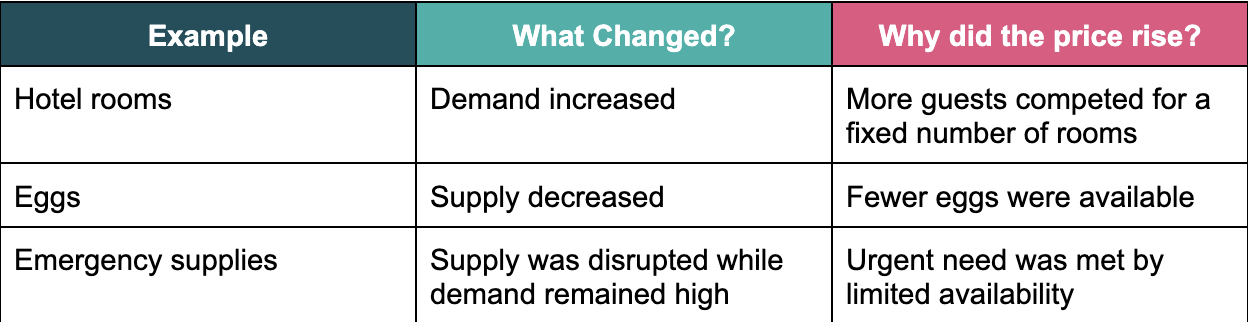
Table 2: Three real-world causes of scarcity-driven price increases, comparing higher demand, reduced supply and emergency disruption.
To conclude, prices of hotels, petrol and eggs can all change even if the products themselves have not improved. The availability of goods relative to demand has changed, and prices reflect this relationship. Markets use price to allocate scarcity which can change consumer behaviour:
A hotel guest may book a hotel further away
A consumer may buy fewer eggs or choose another food
A household may conserve fuel or water during hurricane
Higher prices don’t eliminate scarcity. They change how goods are used and who receives them.
